Company Commander AI
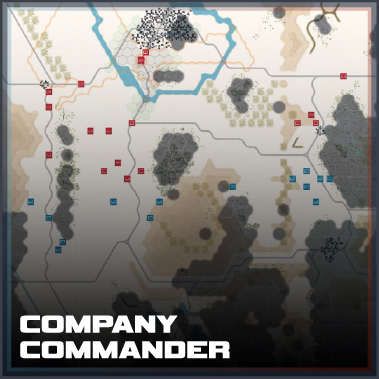
Company Commander AI is the advanced “headless” edition of Hexwar’s flagship tactical PME platform…


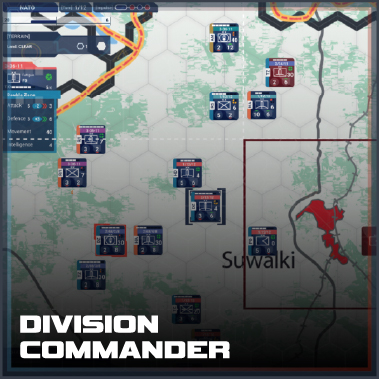
Division Commander is Hexwar’s strategic-level PME wargame based on NATO Division Commander. It operates at Division-to-Corps level, the echelon at which operation planning intersects with large-scale tactical execution and is focused on the 203X high-intensity conventional battlespace. The current scenario set is drawn from the Suwalki Gap and Kaliningrad region, modelling a 1st Guards Tank Army offensive against a NATO coalition comprising Lithuanian (Griffin Brigade, 45th Panzer Brigade DEU, 22nd Marine Expeditionary Unit), US (1st Armoured Division, 173rd Airborne Brigade), German, and Polish (16th Pomeranian Mechanised Division) formations across three linked operational phases.
It is both doctrinally grounded at division and corps echelon and institutionally deployable without specialist infrastructure, dedicated control staff, or weeks of preparation overhead making it directly accessible to the PME institutions and senior officer training programmes that need it most.
Division Commander is designed to challenge command decisions at the operational level of war. Specifically, the relationship between combat support operations, and operational outcome in large-scale conventional combat.
Ground combat is deliberately abstracted to keep analytical focus on the variables that determine success at division and corps: intelligence collection and enemy force identification, combat support asset allocation for multidomain operations, unit supply and logistics and force fatigue management in sustained high-intensity operations.
These identify as decisive in large-scale conventional warfare and they are the variables that most PME programmes currently lack the tools to represent with operational credibility. Division Commander makes them visible, manageable, and consequential in a repeatable training environment.
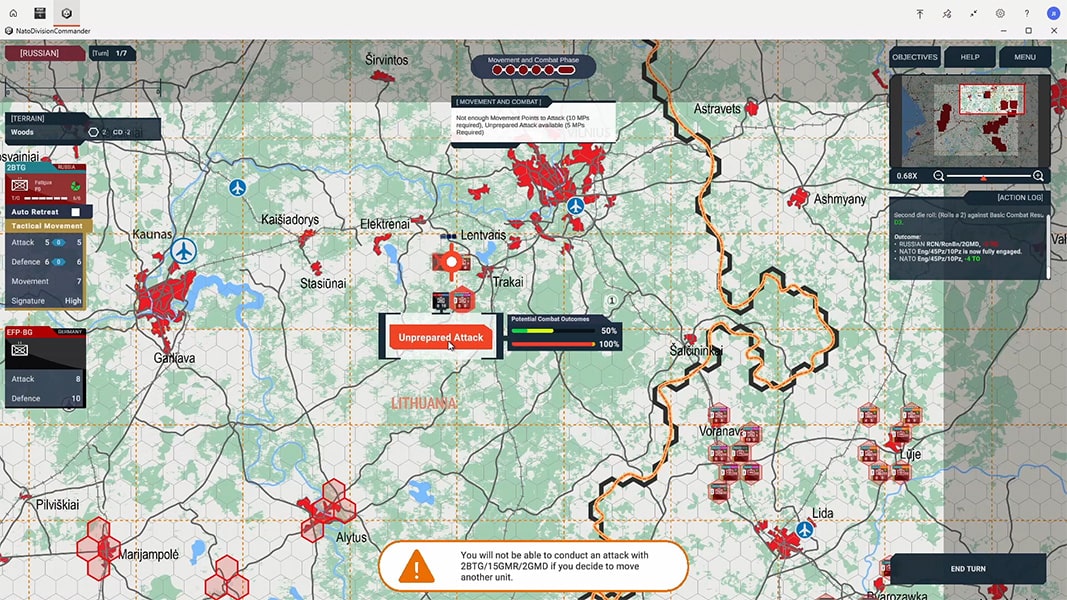
The game mechanics focus on the variables that shape operational outcomes at division and corps echelon:
Operational intelligence shapes what a commander can see, know, and act upon – it determines how much information you have about the enemy forces. The greater a sides intelligence, the more detail you have about enemy locations, their movements, composition and strength. The side with superior intelligence can respond more precisely and maintain the initiative. Commanders must choose carefully the amount of resources to spend and the locations to gather intelligence.
A sides hierarchy is achieved through headquarter units. These form the backbone of effective operations and can directly affect how well units perform. Providing units with command and control keeps them operating at full efficiency. Headquarters use Staff Points to emulate C2 capacity and players will use these issuing orders to subordinate units to change tactical posture.
Mode represents the tactical posture of a unit, reflecting how it is organised, oriented, and prepared for its next task. This simulates the reality that a unit advancing aggressively is configured very differently to one digging in. Switching between these takes time and deliberate effort and it might not always be possible for commanders to change all units. This mechanic encourages players to think ahead – a unit caught in the wrong posture will underperform creating consequences for poor planning.
Supply of resources and ammunition is critical in ensuring combat effectiveness. Headquarter units are used to create supply chains from the Main Supply Route (MSR) to combat units. Players need to be strategic when placing and moving HQs to allow supply lines to remain open and to avoid overextending unsupported units when advancing. Supply lines can be disrupted and contested by enemy actions and their zone of control.
Each side has a pool of assets that represent the specialised capabilities and resources available to that commander. These assets are used to perform a range of functions such as intelligence gathering, counter-battery fire or combat support. This variety and choice means players must think carefully about where and when to assign assets, as the right capability in the right place can make all the difference in battle. Crucially, not all assets are equal in their availability. Some will recover over time and can be used repeatedly over the course of a scenario, while others are single-use that once committed, are gone. Using a one-time asset at the wrong moment can leave a commander without a critical capability when it matters most.
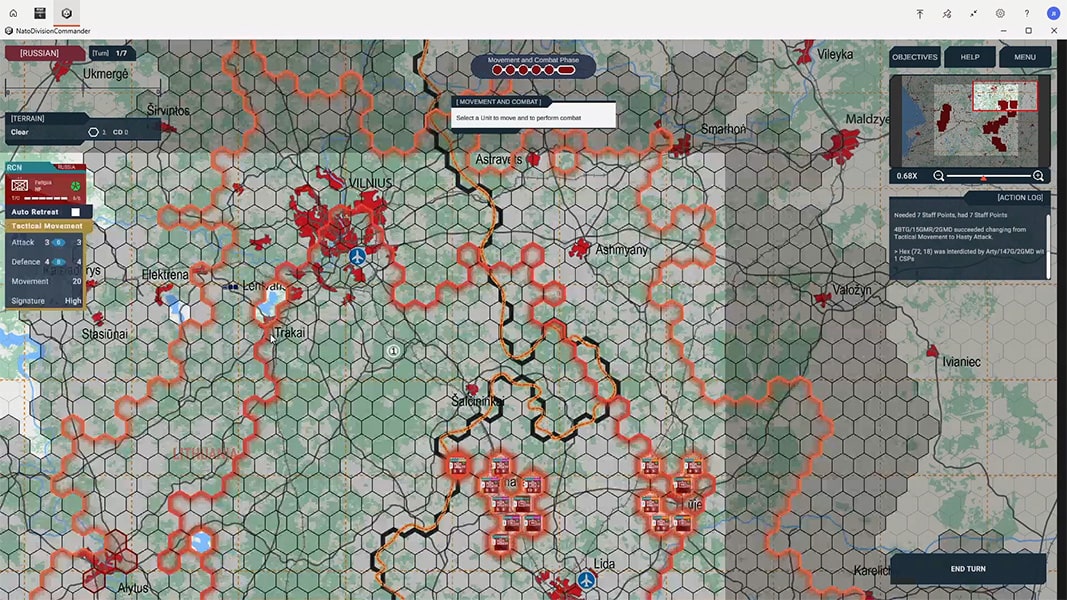
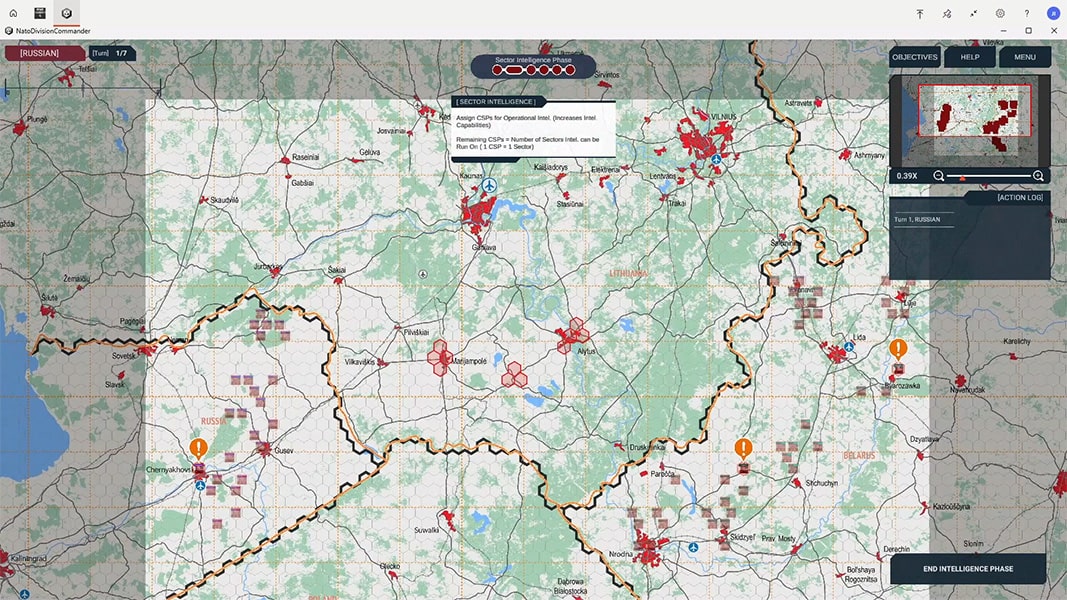
Fatigue tracks the cumulative toll that sustained operations take on a unit, reflecting the physical and mental strain that builds over time. As units remain active, fatigue levels climb and this can cumulate in reducing combat effectiveness and slowing movement. This forces players to manage the operational tempo of their forces carefully, rotating units out of the line and avoiding the temptation to push the same formations repeatedly. A commander who ignores fatigue will find their best units gradually worn down, mirroring the very real challenge of sustaining momentum in prolonged military operations.
Terrain plays an important factor in how commanders position and move their units. The terrain and nearby features affects how far units can move in a given turn, with open terrain allowing rapid advance while rougher ground slows movement considerably. Terrain also affects combat effectiveness, meaning a unit occupying favourable ground is inherently harder to dislodge than one caught in the open. Tactical players will use movement deliberately to establish attack fronts, create defensible lines, or to exploit gaps in the enemy’s position.
Combat is calculated by these interconnected mechanics at the moment of engagement. A unit that is well-supplied, well-rested, properly postured, and supported by an effective HQ will fight very differently to one that is exhausted, isolated, and caught in the wrong stance. To help commanders make effective decisions, combat predictions are provided before committing to an attack giving an informed view of likely outcomes. Commanders are also provided with end of turn summaries indicating the overall status of their units highlighting emerging threats.
The three Suwalki Gap scenarios deliver a linked operational campaign directly relevant to NATO Article 5 contingency planning.
Scenario 1: Objective Alytus -1GTA offensive, conducted defence of southern Lithuania.
Scenario 2: Seizing the Gap – Russian exploitation and land bridge establishment between Kaliningrad and Belarus
Scenario 3: Breaking the Line – NATO 1st Armoured Division counter-attack to restore the corridor and defeat 1GTA.
Officers will work through the full operational arc, regularly under pressure and with situational challenges. The consequences of early decisions can dramatically impact how scenarios play out across the campaign.
Division Commander will connect to the Hexwar HMS platform and AAR analytics layer, enabling faculty to reconstruct the command decision sequence and assess the quality of judgement at each critical operational decision point across the campaign. The development roadmap co-shaped with Marine Corps University and DTIC input includes Advanced Analytics, a full Scenario and Order of Battle Editor (enabling new theaters to be built and deployed by institutional faculty), full multiplayer capability for multi-echelon CPX support, nuclear and chemical warfare modelling, additional operational maps covering Estonia, Latvia, Finland, Poland, Ukraine, and Georgia.
This trajectory transforms Division Commander from a Suwalki Gap scenario set into a globally applicable, institutionally scalable strategic PME platform one that senior faculty and course directors can adapt to their specific curriculum requirements without external contractor support.
Division Commander addresses the most significant gap in current PME wargaming provision at the senior officer level: there is no credible, institutionally accessible digital tool for training division and corps-level command decisions in a large-scale conventional warfare context.
The platform belongs directly in the curriculum space occupied by CGSC Advanced Operations electives, the Army War College wargaming programme, SAMS operational planning seminars, ACSC’s Combined Arms module at Shrivenham, RCDS strategic exercises, and NATO School Oberammergau and JWC operational planning courses.
For senior officers preparing for divisional and corps staff appointments G3/J3, Chief of Staff, or operational command roles it provides a repeatable rehearsal environment for the decisions of large-scale combat that lectures, map exercises, and staff cannot replicate in isolation.

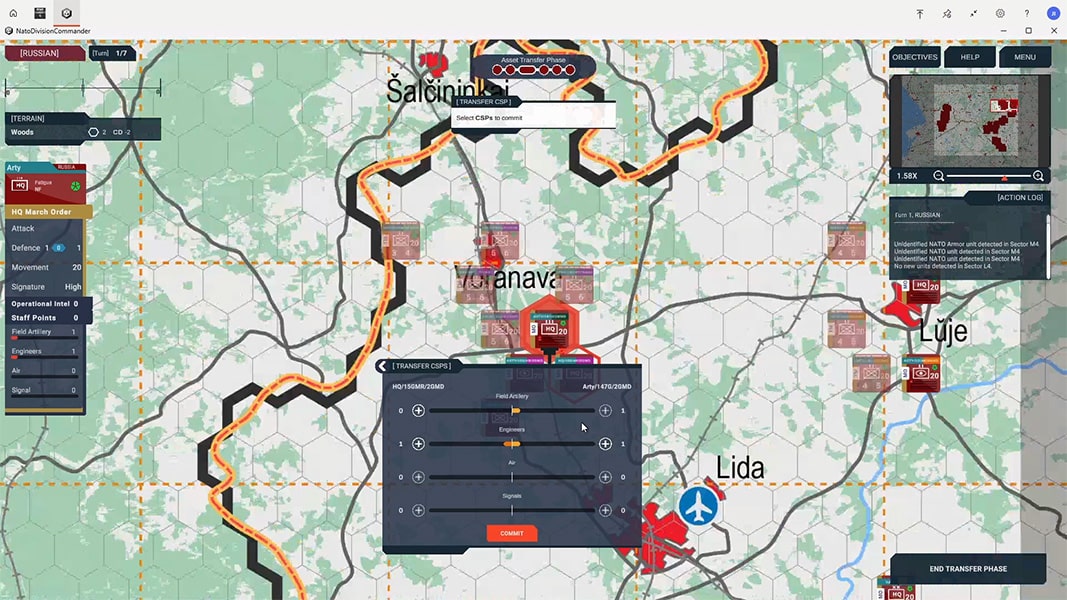
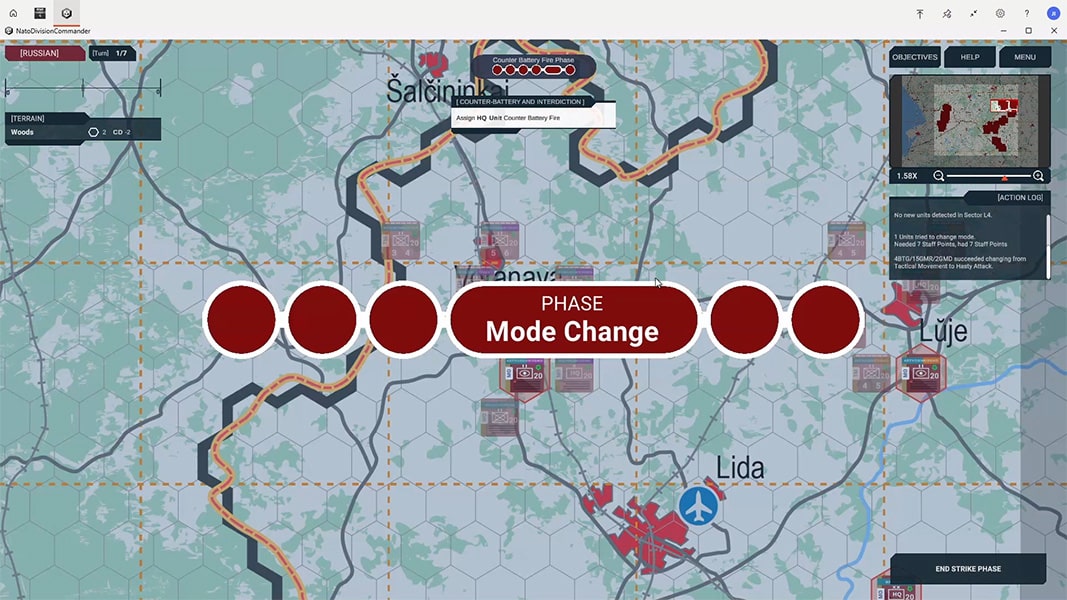
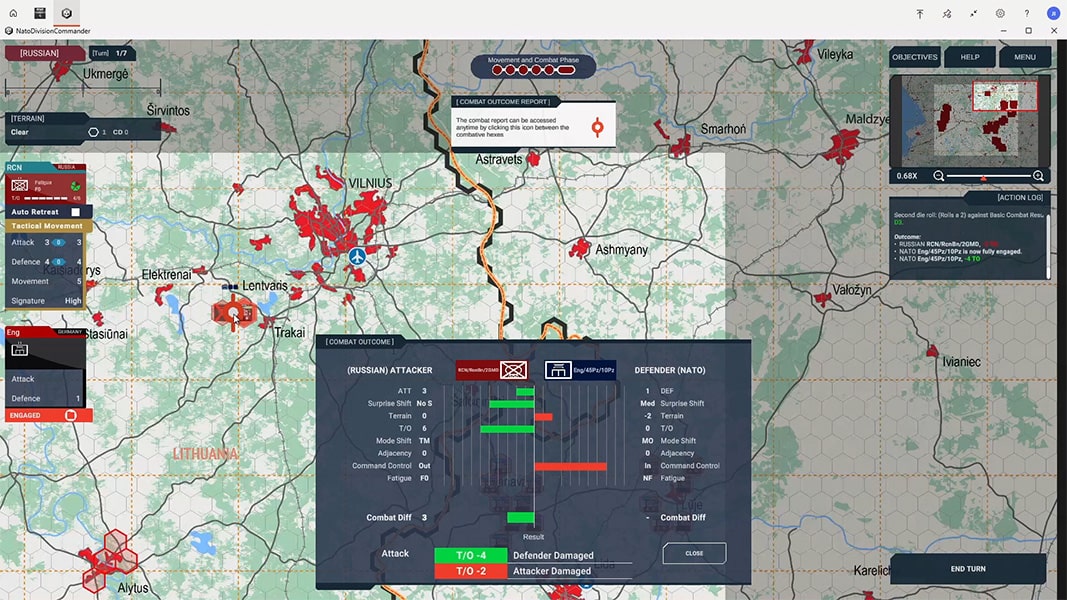
Fills the large-scale conventional warfare gap in senior PME wargaming provision.. Directly relevant to CGSC, AWC, ACSC, RCDS, and NATO staff college curricula.
Co-developed with Marine Corps University and DTIC. Scenarios and order of battle reflect current NATO doctrine, Baltic Enhanced Forward Presence (EFP) structure, and Article 5 contingency planning.
Deliberately designed to centre training on combat support operations, logistics, C2, and force protection the variables that determine operational outcomes in large-scale conventional combat, and the variables most PME tools fail to represent.
Commanders must actively find and track the enemy force through deliberate ISR employment. Poor intelligence discipline translates directly into operational failure a lesson that no briefing or staff estimate can teach with the same consequence.
HQ and Staff Points model C2 capacity and friction under sustained high-intensity operations. Officers experience the operational cost of disrupted C2 in real time, and the premium placed on effective staff integration and span of command management.
Combat effectiveness degrades across sustained high-intensity operations. Officers who fail to rotate and sustain their formations experience this operationally a dimension of large-scale combat that most wargames abstract away entirely.
Russian offensive, exploitation, and NATO counterattack. Officers experience the full operational arc of a large-scale conventional campaign defence, delay, and counter-offensive with consequences carried across all three scenarios.
Company Commander AI is the advanced “headless” edition of Hexwar’s flagship tactical PME platform…
Company Commander Cloud – integrated with HWS and optimized for Cloud Environments
Integrated into Tournament and Challenge Modes, Force Builder capable so players can construct their own force…
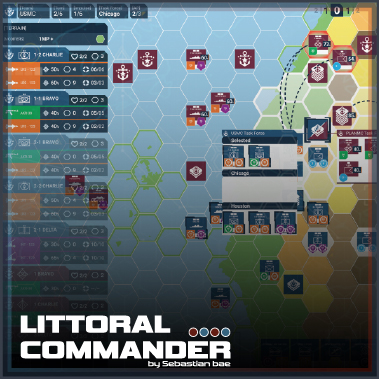
Multi-domain warfare in the modern age. Digital version of the excellent board game by Sebastian Bae.
A digitised form of classic 1980s SPI game. Updated to modern era with ORBAT provided by Leavenworth experts.
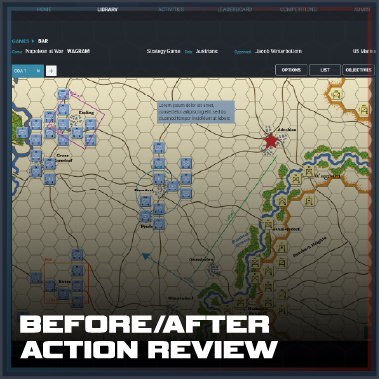
With Code Wizards AI magic our analytics tools allows analysis of play and outcomes